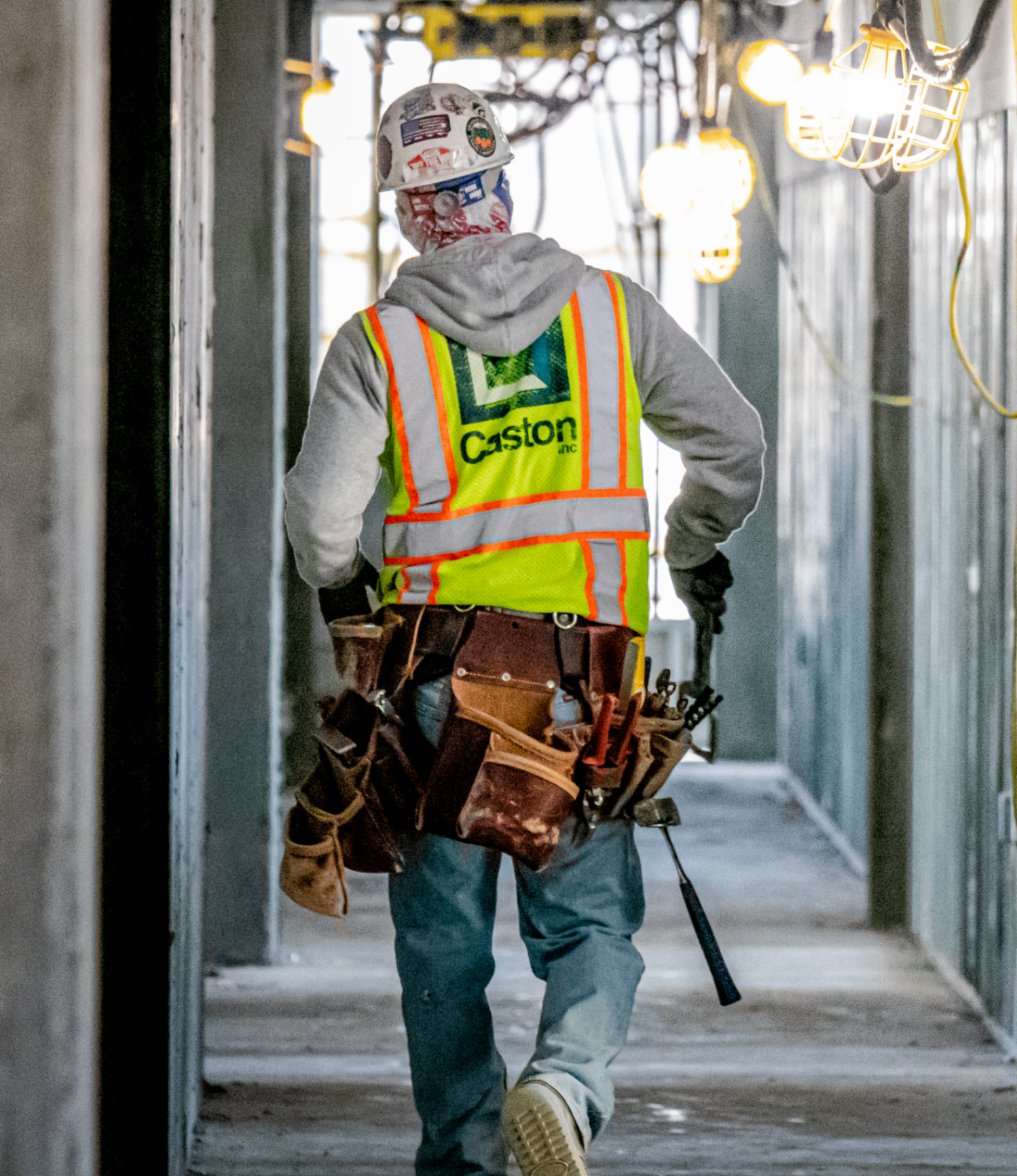

School construction projects operate under deadlines that leave little room for unexpected delays. Whether a district is building new classrooms, modernizing existing facilities, or expanding a campus, construction often needs to be completed before students and teachers return. Missing that deadline can disrupt academic schedules, create temporary space shortages, and place additional financial pressure on school districts.
Unlike many commercial construction projects, school construction must accommodate academic calendars, strict safety requirements, multiple specialized trades, and extensive inspections. A delay involving one contractor can affect several others, creating scheduling problems that extend well beyond the original issue.
At Caston, we understand that successful school construction requires more than skilled craftsmanship. It requires careful planning, dependable crews, consistent communication, and construction coordination that keeps every phase moving toward the same deadline. With a company history spanning more than 70 years in Southern California, we bring the specialized construction capabilities and accountability necessary to help educational facilities stay on track.
Why School Construction Schedules Are Especially Challenging
School districts frequently schedule major construction and renovation projects around summer breaks, holiday closures, and other periods when fewer students occupy campus facilities. These limited construction windows create considerable pressure, particularly when projects involve extensive interior renovations, new buildings, or improvements to occupied campuses.
A summer construction schedule that initially appears manageable can quickly become complicated when material deliveries, inspections, or preceding construction activities take longer than anticipated. Even a relatively small delay can affect the sequence of work that follows, particularly when multiple contractors need access to the same spaces.
California school construction also involves specific regulatory requirements. The Division of the State Architect (DSA) reviews applicable public school construction plans for compliance with structural safety, fire and life safety, accessibility, and other building standards.
At Caston, we recognize that these requirements must be considered throughout construction planning rather than treated as separate administrative obligations. Our experience working in K-12 schools and higher education facilities helps us understand the importance of coordinating specialized construction activities with the broader project schedule.
Construction Coordination Starts Before Work Begins
Effective school construction coordination begins well before crews arrive at the job site. Project managers, general contractors, architects, and specialty contractors must understand the construction documents, identify potential conflicts, establish realistic timelines, and determine how individual activities will affect one another.
For example, interior wall construction cannot proceed efficiently if mechanical, electrical, and plumbing requirements have not been properly coordinated. Similarly, ceiling installation depends on the completion and inspection of systems located above the finished ceiling. When these relationships are overlooked, contractors may need to stop work, modify completed installations, or return to areas that should already be finished.
Caston supports early construction coordination through capabilities such as Building Information Modeling (BIM), design-assist services, and design-build collaboration. These approaches help identify potential construction challenges while design details can still be adjusted, reducing the likelihood of expensive changes during installation.
Our goal is to help customers anticipate problems rather than react to them. By participating in coordination discussions, reviewing construction requirements, and identifying potential scheduling conflicts, we help create a more predictable construction process.
How Multiple Construction Trades Affect School Project Timelines
School buildings involve numerous interconnected construction activities. Metal stud framing establishes the framework for interior walls, while drywall installation, insulation, fireproofing, and acoustical ceilings contribute to the building's safety, functionality, and finished appearance.
Each activity has its own requirements, but none operates entirely independently. Framing must accommodate building systems, fire-rated assemblies must meet approved specifications, and ceiling installations must account for lighting, ventilation, sprinklers, and other equipment.
When these activities involve several independent specialty contractors, communication and scheduling become particularly important. A delay in one trade can prevent another from beginning work, even when materials and labor are otherwise available.
One of Caston's significant advantages is our ability to self-perform numerous specialized construction services, including:
Metal stud framing and drywall installation
Lath and plaster
Spray-applied fireproofing
Thermal and acoustical insulation
Acoustical ceiling systems
Rough carpentry and backing
Exterior insulation and finish systems
Division 10 specialties and architectural finishes
Having these capabilities within one organization can simplify coordination across related scopes of work. Rather than relying on separate companies for every activity, we can coordinate our crews, staffing requirements, and installation sequences around established project milestones.
For school districts and general contractors managing demanding construction schedules, this approach can reduce unnecessary handoffs and improve accountability.
Why Early Problem-Solving Helps Prevent Construction Delays
Unexpected conditions are common during school renovation and modernization projects. Older buildings may contain concealed construction details, outdated systems, or conditions that differ from the original drawings. Even new construction projects can encounter design conflicts, material availability problems, or changes in project requirements.
The difference between a manageable challenge and a major scheduling disruption often comes down to how quickly the issue is identified and addressed.
Consider a classroom modernization project where existing wall conditions interfere with a planned installation. If the problem is discovered after framing and drywall work have progressed, correcting it may require removing completed work and delaying subsequent activities.
Through early field coordination and communication, Caston works to identify these conditions before they create larger problems. Our project managers and field teams understand the importance of raising concerns promptly, discussing practical solutions, and coordinating necessary changes with the responsible project participants.
This approach reflects one of our core principles: accountability means taking ownership of the work and helping move the project forward when challenges arise.
Coordinating Construction on Occupied School Campuses
Not every educational construction project can be completed while students are away. Many schools undergo improvements during the academic year, requiring construction activities to take place near occupied classrooms, administrative offices, athletic facilities, and pedestrian walkways.
These environments introduce additional logistical considerations. Construction access must be coordinated with campus operations, work areas must remain appropriately separated, and potentially disruptive activities may need to be scheduled around instructional hours.
Noise, dust, deliveries, and movement of construction equipment all require careful planning. School administrators and construction teams must also consider how temporary closures or changes in access affect students, employees, and visitors.
Caston understands that construction work must support the needs of the larger campus. We coordinate our activities with the general contractor and other project stakeholders to help minimize unnecessary disruption while maintaining safe and productive work areas.
Our experience in educational environments, including classrooms, gymnasiums, STEM facilities, and college campuses, reinforces the importance of adapting construction operations to the conditions of each project.
Maintaining Quality When Construction Deadlines Are Tight
One of the greatest risks associated with accelerated construction schedules is allowing speed to compromise workmanship. When contractors focus exclusively on meeting completion dates, insufficient attention to installation details can create problems that require corrections later.
In school construction, those corrections can be particularly disruptive. Improperly installed drywall assemblies, incomplete fireproofing, or poorly coordinated ceiling systems may affect inspections, finishing activities, and the building's readiness for occupancy.
The California Department of General Services explains that DSA construction oversight includes reviewing inspection reports, construction changes, and compliance with approved plans. These processes make documentation and quality control essential components of project completion.
At Caston, we believe that quality workmanship and schedule performance should reinforce one another. Completing work correctly the first time reduces the likelihood of rework, protects subsequent construction activities, and helps maintain confidence in the overall schedule.
Our experienced field crews understand that meeting a deadline is only meaningful when the finished work also meets the project's specifications and performance requirements.
The Importance of Communication and Accountability
Construction schedules depend on decisions being made at the right time. When questions remain unanswered, crews may be unable to proceed, materials may sit unused, and carefully planned work sequences can begin to unravel.
Clear communication between specialty contractors, general contractors, architects, inspectors, and school representatives helps prevent these situations. Everyone involved needs accurate information about current progress, upcoming activities, potential conflicts, and decisions that could affect the schedule.
At Caston, we place considerable importance on direct communication and accessible leadership. Our customers work with people who understand the project, recognize its priorities, and take responsibility for resolving issues within our scope.
We also understand that school construction involves more than meeting a contractual obligation. District representatives, facility managers, and construction leaders are accountable to students, families, educators, and their communities.
That responsibility deserves a construction partner who treats commitments seriously and understands the consequences of missed deadlines.
Planning for Inspections, Finishing Work, and Project Completion
As a school construction project approaches completion, coordination becomes increasingly important. Multiple trades may be finishing their installations while inspections, corrections, equipment testing, and final cleaning activities are taking place.
This stage can become congested if contractors have not planned their remaining work carefully. An unfinished ceiling section, incomplete wall assembly, or unresolved inspection item can interfere with subsequent activities and delay the building's readiness for use.
Caston approaches project completion with an understanding that our work must fit into these broader requirements. We coordinate finishing activities, address punch-list items within our scope, and work with project teams to resolve outstanding issues efficiently.
A successful project is not simply one where construction crews finish their assignments. It is one where completed work supports the customer's overall occupancy and operational objectives.
Frequently Asked Questions About School Construction Coordination
School districts, facility managers, and general contractors often have questions about managing educational construction projects under demanding timelines. The following answers address several practical considerations that can influence project success.
Can school construction projects be completed in phases?
Yes. Phased construction can allow schools to improve facilities while continuing to use other portions of the campus. However, successful phasing requires careful consideration of building access, construction boundaries, utility interruptions, and the order in which spaces become available.
Caston works within established project phases to coordinate our specialty construction activities with the overall construction plan. This helps customers maintain progress while accommodating operational requirements.
How does Building Information Modeling help school construction projects?
Building Information Modeling allows project teams to use digital building information to evaluate how different construction components fit together. Depending on the project, BIM coordination can help identify conflicts involving walls, structural elements, mechanical systems, and other building components before installation begins.
Caston's BIM capabilities support coordination within our scope, helping reduce avoidable field conflicts and improve installation planning.
What should school districts consider when selecting specialty construction contractors?
School districts and general contractors should evaluate relevant educational construction experience, technical capabilities, workforce availability, safety practices, communication, and the contractor's ability to meet demanding schedules.
A contractor's ability to identify problems early and coordinate effectively with other trades can be just as important as the initial construction price.
Can specialty contractors help recover time when a school construction project falls behind schedule?
Specialty contractors may help recover lost time by evaluating installation sequences, adjusting crew assignments, or coordinating work in additional areas when conditions permit.
However, schedule recovery depends on available work areas, required inspections, material availability, and other project constraints. Caston works collaboratively with project teams to identify practical solutions without compromising safety or workmanship.
Build With Confidence. Partner With Caston Inc.
School construction projects demand more than technical expertise. They require dependable people, careful coordination, and a commitment to delivering quality work within the schedules that educational institutions depend on. At Caston, we understand the responsibility behind every classroom, gymnasium, and campus improvement project. Our role is to help customers navigate construction challenges with greater confidence.
For more than 70 years, Caston has served Southern California with a commitment to exceptional craftsmanship, accountability, and lasting relationships. With a workforce of more than 600 people and extensive self-performed specialty construction capabilities, we bring the experience and resources necessary to support complex educational construction projects. From drywall and metal stud framing to fireproofing, acoustical ceilings, and specialized finishes, our teams understand how individual construction activities contribute to successful project delivery.
Our philosophy has remained consistent across generations: Do exceptional work. Treat people well. Keep your word. We believe customers deserve construction partners who answer the phone, address challenges directly, and stand behind their commitments. Whether we are working on a new school building, an occupied campus renovation, or a time-sensitive modernization project, we approach the work as a partnership built on trust, communication, and shared responsibility.
If you are planning a school construction project in Riverside County or elsewhere in Southern California, contact Caston to discuss your construction requirements, scheduling challenges, and specialized trade needs. Call (909) 381-1619 to speak with our team and discover how experienced construction coordination can help move your next educational project forward with confidence.